The ServiceNow Australia release is officially here. With General Availability landing on May 5, 2026, this is one of the most significant updates ServiceNow has shipped in years — and it's more than just a feature drop. It marks a strategic inflection point: the platform is transitioning from a workflow engine with AI features to an AI-native enterprise operating system.
At Atlafy, we work with organizations every day to get the most out of their ServiceNow investment. In this post, we break down what the Australia release actually changes, what it means for your team, and how to approach your upgrade with confidence.
After exhausting the alphabet with Zurich in Q4 2025, ServiceNow is transitioning to country names, restarting at 'A' — with Australia for Q2 2026 and Brazil to follow in Q4 2026.
But the naming convention is the least interesting thing about this release. Australia represents a strategic shift toward AI-first workflows, Platform Analytics transformation, and intelligent automation across all modules. Organizations using ServiceNow will notice meaningful changes in how users interact with the platform, how analytics are delivered, and how governance is enforced.
The Australia release also introduces a revised release cadence, new upgrade deadlines, and key product lifecycle updates — making early awareness critical for IT leaders and platform owners planning their 2026 roadmaps.
Beginning with the Australia series, ServiceNow's major release schedule has been shifted to Q2 and Q4 each year, in alignment with global business cycles. The deadline to upgrade to a supported version has also been moved forward by a month, making June and December the official cut-off months for upgrades.
This shift creates a longer planning window between releases — which is good news for teams that need more runway to test and validate. The flip side: organizations that delay upgrades risk falling out of the N-1 support window, losing access to patches and security updates.
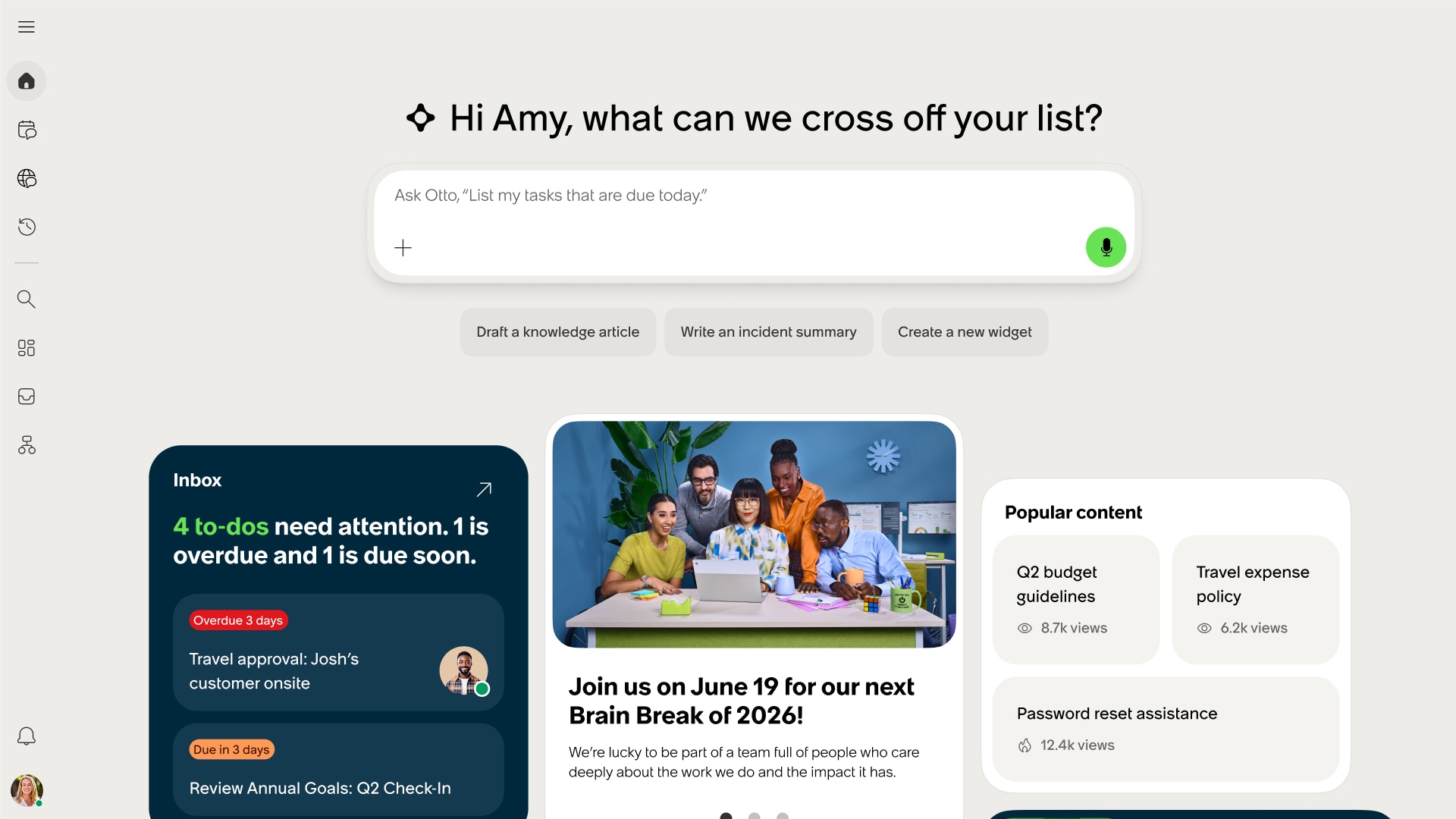
If Zurich introduced agentic AI as a concept, Australia makes it operational. The Australia release advances AI from assistance to execution, enabling organizations to embed intelligent automation directly into everyday workflows with greater context and precision. Key highlights include AI Agent Advisor, AI Desktop Actions, and Dynamic Guidance — all designed to reduce manual effort and accelerate decision-making across the enterprise.
One of the standout additions for developers is the 'Use an AI agent' action in Flow Designer. A flow is no longer limited to deterministic branching and static actions — it can now invoke an AI-driven step and continue execution using structured results. This is one of the clearest signs that Flow Designer is evolving from a pure automation engine into an AI-assisted orchestration layer.
In practice, this means flows can pass incident data to an AI agent and use the output to suggest resolution paths, draft responses, or trigger escalations — all within a single automated process.
This is arguably the biggest operational change in the Australia release, and one that requires careful planning.
Platform Analytics is enabled by default for all users on upgrade. After the upgrade, only admins can create Core UI analytics objects, all Core UI reports become unpublished, and Analytics Hub redirects to KPI Details. ServiceNow provides a Migration Center to help organizations identify what migrates directly and what moves in compatibility mode.
The good news: legacy customers will still be able to create new Core UI content through the end of 2027 — so there's a transition runway. But the direction is clear: Platform Analytics is the future, and Australia makes it the default.
Platform Analytics integrates Now Assist AI capabilities directly into analytics, transforming static dashboards into conversational intelligence. Teams can ask natural language questions about their data — like "Why did incident volume spike last Tuesday?" — and get AI-generated answers.
Australia brings ReleaseOps into the spotlight as a mature release management capability. In a controlled enterprise release, the technical deployment can move through ReleaseOps while the pipeline also pauses for mandatory activities such as business approval, XML import verification, data load completion, or post-production smoke checks — all managed as part of the same orchestrated release process, rather than tracked outside the platform.
This is a significant step forward for organizations running complex, multi-team ServiceNow deployments. Release governance moves from spreadsheets and email threads into the platform itself.
Build Agent now supports Zurich, adds new metadata types, and brings improved search capabilities. A brand new AI agent also joins the portfolio: the Release lifecycle documentation AI agent, which automates release notes and update set descriptions.
Build Agent interaction limits are also increasing: the trial version allows 100 prompts per instance per 30-day cycle, available to all ServiceNow customers at no cost via the ServiceNow Store.
Looking ahead, a new skill called Test Agent is expected — a Build Agent capability that generates ATF test coverage for what Build Agent creates, explaining why tests fail and suggesting fixes so teams can build and test in a single session.
Australia unifies everything under Platform Analytics with AI-native features, and adds the Cloud Governance Suite and Operational Technology Management (OTM) to address the explosion of unmanaged cloud spend and OT/IT convergence.
These additions are particularly relevant for CIOs grappling with shadow IT and the growing overlap between operational technology (OT) and traditional IT environments — a challenge that has intensified with the proliferation of IoT and connected industrial systems.
The Australia release isn't just a platform story — it touches virtually every major ServiceNow module:
Upgrading to Australia isn't something to approach at the last minute. Here's what we recommend:
1. Audit your analytics landscape. Identify all reports and dashboards built on legacy Performance Analytics. Map them against the Migration Center output and prioritize which ones need manual attention.
2. Review your SKU portfolio. Assessing exposure to End-of-Life SKUs and evaluating licensing or modernization needs should be part of your pre-upgrade checklist.
3. Test in a sub-production instance. Australia features have been available in sandbox environments since early 2026. Use this time to validate your customizations, integrations, and ATF test coverage before production cutover.
4. Align your team on ReleaseOps. If you're not already using ReleaseOps, Australia is a good moment to adopt it. It will pay dividends as you manage ongoing deployments in an increasingly AI-driven platform.
5. Plan for the new upgrade timeline. With the cut-off now in June (not July), your upgrade window is tighter. Build your change management and testing timeline accordingly.
Australia isn't glamorous — it's infrastructure, consolidating analytics, governing cloud sprawl, and extending visibility into OT environments. But infrastructure matters. Organizations that implement Australia's capabilities will spend time making data-driven decisions in real-time, spending less on cloud infrastructure, and managing previously invisible OT assets that represent material business risk.
Put more simply: this release lays the foundation for everything that comes next. The AI capabilities introduced here — embedded in flows, analytics, and the developer experience — are what will power the autonomous operations that Brazil and beyond will deliver.
Whether you're still on Zurich planning your upgrade path, or you're already in the middle of an Australia migration, Atlafy's ServiceNow experts are here to help you navigate the complexity.
From analytics migration planning and ReleaseOps adoption to Now Assist enablement and governance frameworks, we bring the experience and methodology to make your Australia upgrade smooth, compliant, and value-generating from day one.
Ready to get started? Contact the Atlafy team and let's map out your Australia upgrade strategy together.
100% ServiceNow consulting and implementation player

We help modern businesses leverage the ServiceNow platform